
Table of Contents
- Why Platform Designs Matter More Than Ever
- The Limits of Traditional Platform Layouts
- A More Flexible Approach to Platform Design
- One Experience Across TV and Mobile
- Design Still Shapes Guest Perception
- Choosing the Right In-Room TV Platform Experience for Your Property
- A New Level of Flexibility for the Guest TV Platform
- Where Platform Design Goes Next
- Explore What’s Possible with WorldVue
Most hotels invest heavily in the physical guest experience. Room design, amenities, and service all get careful attention. But one of the most visible in-room touchpoints often gets less strategic focus: the TV.
Today’s guests don’t treat the in-room TV as passive entertainment. They use it to explore the property, browse services, and decide what to do next. In many cases, it’s the first place they encounter the hotel’s digital experience. It’s also where they gather an understanding of available amenities.
That moment matters.
For properties using the WorldVue HUB®, the TV becomes more than a screen. It becomes a gateway to amenities, promotions, and information that can shape how guests engage during their stay.
The challenge is that not all guest TV user interface experiences are built to support that role.
When the interface feels cluttered or outdated, guests move on quickly. When it feels clear and intuitive, they explore. They discover and engage more.
That difference comes down to design. Not just visual design, but also structure, content priorities, and long-term flexibility.
Why Platform Designs Matter More Than Ever
The in-room TV remains one of the most visible touchpoints in the guest room. Guests no longer use it just for entertainment. They also use it to find information, explore services, and discover on-property offerings.
Guests don’t approach this experience with patience. They scan quickly and look for clear options. If something isn’t quickly available and attention-grabbing, they move on.
A well-designed platform within the TV experience helps guests:
- Discover amenities they might otherwise miss.
- Navigate services without confusion.
- Engage with the property on their own time.
When the experience feels clear and intuitive, guests explore more. When it feels dated or cluttered, they disengage quickly.
That impacts more than usability. It affects how guests perceive the property and whether they interact with what the hotel offers.
The Limits of Traditional Platform Layouts
Many platform experiences rely on a fixed structure. Content sits in predefined areas, and updates often require more effort than they should.
This creates a few common challenges:
- Content becomes stale because updates take time.
- Promotions compete for limited space.
- Layouts do not adapt well to different property needs.
For some properties, a familiar layout still works well. It feels predictable and easy to navigate, especially for guests who prefer a straightforward experience.
However, as hotels look to do more within the in-room experience, that rigidity can become a constraint. Teams may want to highlight seasonal offers, shift focus to different amenities, or refresh content more frequently, but the structure makes it difficult.
A More Flexible Approach to Platform Design
Modern digital experiences now favor modular design. Instead of using one fixed layout, they organize content into clearly defined sections.
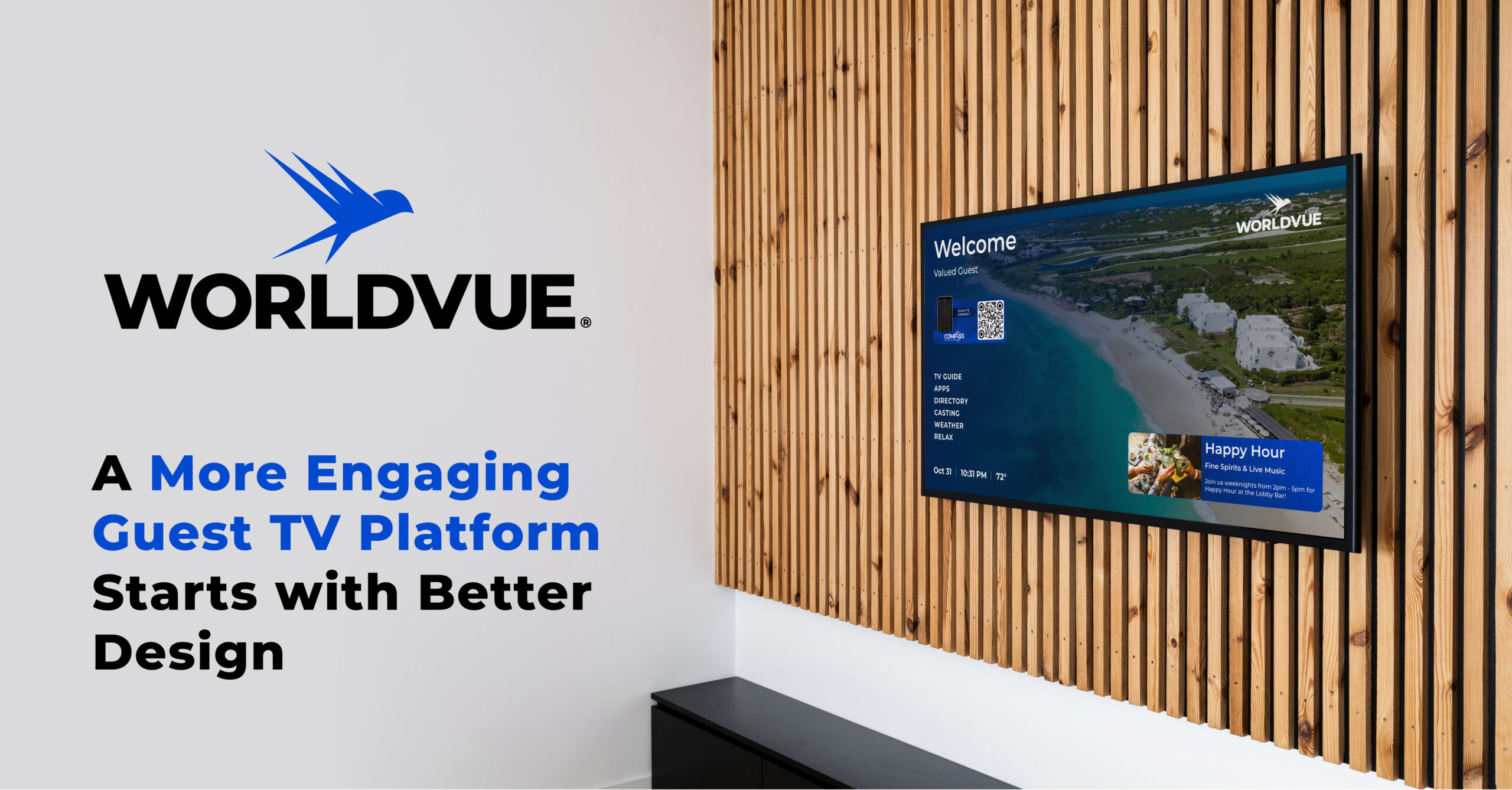
Within the WorldVue HUB® interface, each section serves a specific purpose. Properties can update content without reworking the entire screen, any day of the week.
This structure gives hotel teams more control over how the experience evolves. It also reduces the friction that often comes with keeping content up to date. It becomes easier to:
- Highlight dining, spa, amenities, or promotions based on current priorities.
- Adjust content for seasonal campaigns or events.
- Keep the guest TV interface fresh without requiring a full redesign.
- Prepare for group branding opportunities.
For teams managing multiple properties, this structure also simplifies operations. Teams can update content more efficiently and maintain consistency without duplicating effort. Over time, that consistency helps reinforce brand standards while still allowing each property to tailor the experience.
One Experience Across TV and Mobile
Guests don’t think in channels; they move between screens naturally.
They might browse amenities on the in-room TV, then revisit those options later on their phone. Guests expect that experience to feel connected.
That creates a challenge for hotels. Content often lives in separate systems, and updates need to happen more than once. Over time, inconsistencies appear.
Hotels can create a more unified experience by aligning the TV and mobile interfaces. For example, design can unify the structure and visual language of WorldVue HUB® with Compass by WorldVue™. This enables a mobile web-based experience, bringing the TV experience to guests’ mobile devices.
Content created for one platform can support the other more easily. Updates become more efficient. The experience stays consistent from the TV to the guest’s mobile device.
This reduces operational effort while improving the overall guest journey.
Design Still Shapes Guest Perception
Function matters, but so does form.
Guests notice when the in-room experience looks modern and intuitive. They also notice when it misses that mark.
Clean layouts, clear hierarchy, and thoughtful use of visual depth help guide attention. They make content easier to scan and easier to act on.
Modern design approaches use layered visuals and structured layouts to create clarity and polish. They help guests focus on what matters without feeling overwhelmed.
The result feels subtle but important. Guests engage more naturally, and the experience better reflects the overall quality of the property.


Choosing the Right In-Room TV Platform Experience for Your Property
No single approach fits every hotel. Different properties have different goals, guest profiles, and operational needs.
That’s why WorldVue offers multiple in-room TV interface options within the WorldVue HUB experience:
- Traditional interface – A straightforward layout that prioritizes simplicity and ease of use. Ideal for properties that value consistency and a low learning curve.
- Sideswipe interface – A more modern, high-resolution experience with intuitive navigation. This is well-suited for properties that want a more dynamic, app-like feel.
- Modular, widget-based interface – A flexible approach that organizes content into clear sections. Designed for properties that want greater control, adaptability, and alignment across platforms.
Each option supports a different type of experience. The goal is to align the guest TV interface with the property, not force a single approach.
A New Level of Flexibility for the Guest TV Platform
Our latest theme uses a modular, widget-based interface. This approach adds a new level of flexibility within the WorldVue HUB® experience.
Instead of working within a fixed layout, hotels can define and manage distinct content areas. Teams can update, prioritize, or adjust each section independently. This creates a more adaptable experience that better reflects daily operations.
Hotels can:
- Emphasize different amenities based on guest needs or property focus.
- Rotate promotions without disrupting the overall layout.
- Maintain a cleaner, more organized presentation of content.
- Offer more group branding experiences.
- Bring specific information or features front and center on the home screen.
Just as important, this approach gives teams more control without adding complexity. Teams can target updates more precisely and make changes faster. The experience stays aligned with the property’s current priorities.
It also creates a stronger foundation for future alignment with mobile experiences like Compass by WorldVue™. As that connection evolves, teams can share and extend content across both platforms with fewer updates.
The result is a guest experience that feels more responsive and connected while staying easier to manage behind the scenes.
Where Platform Design Goes Next
The role of the in-room user interface continues to expand. Guests now use it to explore, discover, and engage with the property.
How easily can guests find what they need? How effectively can hotels highlight what they offer? And how consistent does the experience feel across every touchpoint?
Design plays a central role in everything.
Hotels that rethink the in-room TV experience can create a more engaging and connected guest journey from the first interaction. Properties that treat the TV as a strategic touchpoint, not just a utility, can drive stronger engagement and more on-property value.
Explore What’s Possible with WorldVue
Every property approaches the in-room guest experience differently. The right interface should reflect that.
WorldVue continues to evolve the WorldVue HUB to support more engaging TV experiences, greater flexibility in how properties present content, and stronger alignment with mobile companions like Compass by WorldVue. Current WorldVue customers can upgrade their in-room TV user interface experience at no additional cost, pending current equipment deployments.
If you’re rethinking your in-room experience, now is the time to explore what’s possible.