

Table of Contents
- From fixed function to fluid revenue
- Experience becomes the new unit of revenue
- Programming space for culture and demand cycles
- Infrastructure becomes production capacity
- Back-of-house as distributed revenue infrastructure
- The missing layer: Space orchestration at scale
- How WorldVue helps: Property technology integration
- What comes next: Programmable hospitality
- How to operationalize hotel space repurposing
- Activate your space as a revenue engine
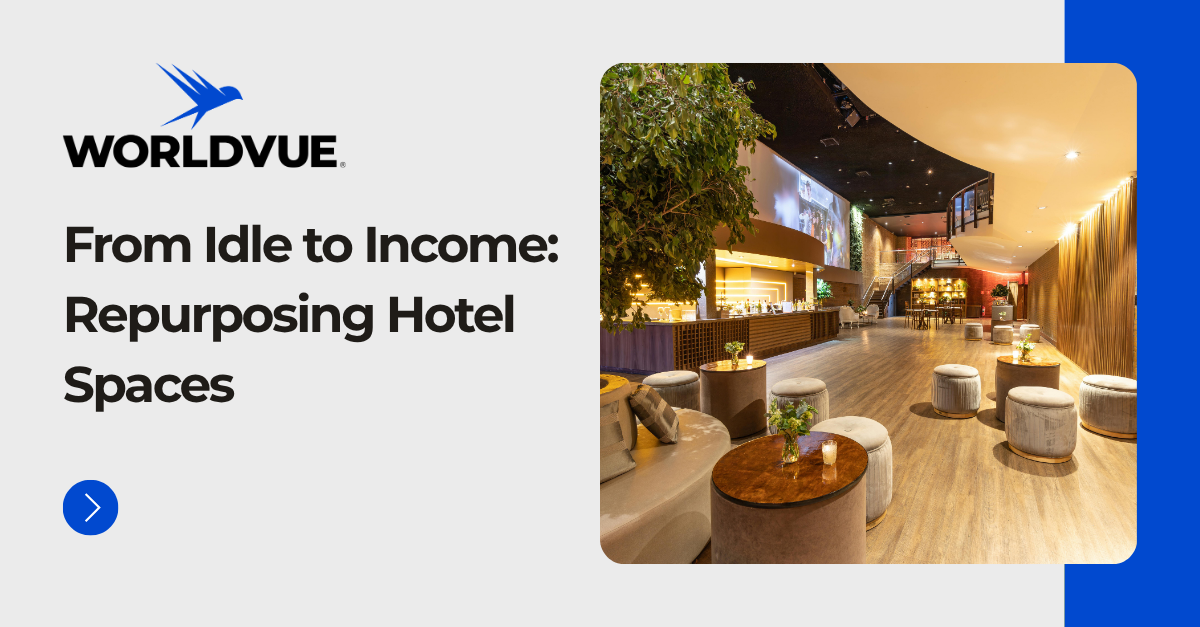
Hotels are rethinking what it means to have unused space. Lobbies, ballrooms, rooftops, and back-of-house areas no longer sit idle between traditional uses. They function as revenue environments that shift purpose throughout the day.
This shift is structural, not merely cosmetic. Hotels are moving beyond occupancy as the primary revenue driver. They now focus on how effectively they use every square foot.
As this shift accelerates, hotels are no longer thinking in fixed spaces. They are building adaptable revenue environments instead.
The result is a new operating model. Space adapts to market demand. It serves multiple audiences. It generates revenue across more hours each day.
From fixed function to fluid revenue
To understand this shift, it helps to see how traditional hotel space models are breaking down.
For decades, hotel design followed a predictable pattern: A ballroom hosted events. A lobby supported arrivals and departures. A boardroom served meetings. Once these spaces were idle, they produced no value.
That model no longer holds.
Hotels now design and retrofit spaces for multiple functions. A lobby may serve as a coworking hub in the morning, a café during the day, and a social venue at night.
- The Ace Hotel helped define this shift. It positioned its lobby as a public space that blends work, hospitality, and social activity.
- Marriott extended this approach. Sheraton introduced community tables and productivity-focused lobby design for guests and locals.
- Moxy Hotels follows a similar model. Its lobbies shift from collaboration zones during the day to social environments at night.
Space is no longer static inventory. It becomes a revenue system tied to time, audience, and activation.
Experience becomes the new unit of revenue
Beyond operational redesign, hotels are rethinking what they actually sell.
The strongest transformations do not only repurpose space. They reposition it as an experience platform.
- The Parkside Hotel & Spa converted a boardroom into a 29-seat private cinema. It now operates as a rentable guest experience.
- Hotel Zephyr in San Francisco reworked large areas into interactive social environments. These include game rooms and experiential installations.
These spaces generate revenue differently from traditional meeting rooms. Demand is driven by novelty, social value, and repeat engagement.
Programming space for culture and demand cycles
This shift becomes clearer when looking at how hotels manage demand over time.
Hotels increasingly treat event space as programmable inventory rather than fixed rooms.
- The Standard, High Line activates its spaces through cultural programming and community events. This keeps public areas active beyond peak travel periods.
- The Intercontinental Lyon – Hotel Dieu adapts its meeting spaces for corporate and local audiences. It shifts usage based on demand cycles.
This turns static square footage into dynamic programming capacity. Revenue aligns with guest engagement, not just bookings.
Infrastructure becomes production capacity
In some cases, the transformation goes even further. It moves into production.
- Hilton Vienna Park and several other Hilton locations operate rooftop beehives that produce honey for food, beverage, and retail use.
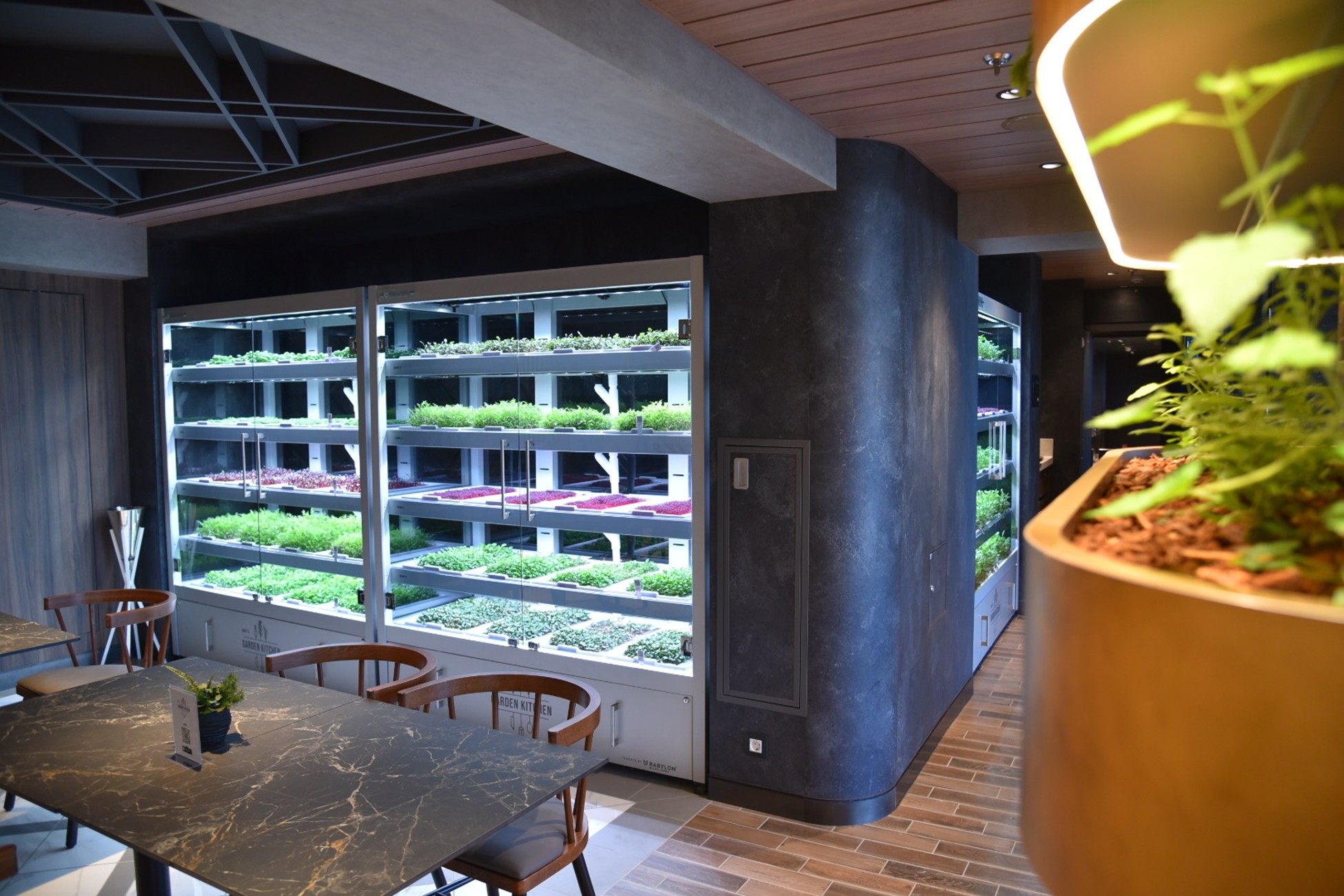
- JW Marriott properties, among others, use Babylon Micro-Farms hydroponics systems on-site. They grow herbs and greens for hotel kitchens.
Here, space supports business operations directly. It also highlights sustainability value.
Back-of-house as distributed revenue infrastructure
Even less visible parts of the hotel are being reconsidered.
Hotels are also monetizing operational spaces. Teams once treated these areas as cost centers.
AccorHotels participates in ghost kitchen partnerships. External brands operate from underused kitchen infrastructure.
This model converts fixed capacity into flexible revenue infrastructure. It supports multiple tenants at once.
The missing layer: Space orchestration at scale
Most space repurposing strategies succeed at the design level. Far fewer succeed at the operational level.
The difference comes down to orchestration. A redesigned space can attract attention. Only a coordinated system can sustain demand, manage access, and generate repeatable revenue.
In practice, this means revenue from repurposed space is not driven by design alone. It is driven by how well that space is connected, managed, and adapted in real time.
Without orchestration, spaces remain one-off activations. With it, they become scalable revenue systems.
The challenge: Repurposing space creates opportunity. Sustaining it creates complexity.
When a lobby becomes a coworking hub, it requires high-density connectivity. Similarly, when a ballroom becomes a social venue, it must shift identity throughout the day. When a basement supports ghost kitchens, it requires secure access and coordination.
Many transformation efforts stall here. The physical redesign works, but the systems do not connect.
Hotels that succeed introduce an orchestration layer. It connects space, network, access, and experience into one system. This requires coordination across multiple operational layers working in real time.
This is where many strategies fail. Physical redesign happens, demand follows briefly, then operational friction limits growth.
How WorldVue helps: Property technology integration
WorldVue addresses this gap by acting as a property technology integrator in this model. Rather than addressing isolated challenges, it connects operational systems, enabling dynamic space use.
- Connectivity layer: High-density managed Wi-Fi supports concurrent demand across guests, locals, and events while maintaining performance. Once stable, properties can prioritize bandwidth by zone so activations do not conflict.
- Experience layer: Digital signage and WorldVue HUB® allow hotels to reprogram space identity throughout the day. A lobby can shift from coworking to event activation without a physical change. WorldVue HUB also enables properties to highlight updated information for their guests, improving the guest experience.
- Content layer: Secure casting and streaming extend entertainment into private and semi-private spaces. Guests control content in managed environments like cinemas or lounges.
- Monetization layer: Tiered access and authentication enable revenue models such as memberships, day passes, and bundled services tied to the PMS.
- Control layer: IoT systems unify lighting, access, and environmental controls. This improves responsiveness while reducing operational overhead.
From there, monetization depends on structured access and seamless operations.
Together, these capabilities form a coordinated system. Space becomes a connected asset rather than a set of isolated functions.
This distinction matters. Without orchestration, spaces remain isolated experiments. With it, they scale into repeatable revenue models.
What comes next: Programmable hospitality
Taken together, these changes point to a broader shift in hospitality operations.
Hotel space is becoming programmable.
The same square footage will support multiple audiences, revenue models, and identities within a single day.
Success will depend less on physical redesign and more on real-time coordination.
The competitive advantage will not come from more space. It will come from better orchestration of existing space.
The hotels that lead in this next phase will not be defined by how much space they have but by how effectively they orchestrate it.
How to operationalize hotel space repurposing
Turning underused space into a reliable revenue stream requires more than a creative concept. It requires repeatable operations and clear performance signals.
- Start with demand mapping. Identify who will use the space and when. Local professionals may drive weekday daytime usage, while guests and social groups drive evening and weekend use. Each segment has different expectations for connectivity, access, and pricing.
- Define the revenue model early. Decide whether the space will generate income through memberships, day passes, private bookings, food and beverage, or a combination of these. The model should align with demand patterns, not fight them.
- Build for flexibility at the infrastructure level. Power, connectivity, and access controls should support multiple configurations without manual intervention. Spaces that require constant staff adjustment will not scale efficiently.
- Establish clear operational ownership. Repurposed spaces often sit between departments such as rooms, F&B, and events. Without defined ownership, execution becomes inconsistent and teams miss revenue opportunities.
- Track performance with the right metrics. Occupancy alone is no longer enough. Hotels should monitor utilization by hour, revenue per square foot, dwell time, and conversion from traffic to paid usage. These metrics reveal whether a space is truly functioning as a revenue asset.
- Finally, treat iteration as part of the model. The most successful properties refine programming, pricing, and positioning over time. Spaces evolve based on real usage data, not assumptions.
With the right operational framework, repurposed spaces move beyond one-off activations. They become predictable, scalable contributors to total property revenue.
Activate your space as a revenue engine
Underused space no longer represents a design challenge. It can become an operational system ready to generate revenue.
Hotels pursuing flexible environments need more than physical upgrades. They need infrastructure that connects experience, access, and monetization across dynamic spaces.
WorldVue supports this shift as the integration layer behind connected hospitality environments. Contact us to learn more about how we can support your flexible spaces.