

Table of Contents
- Start Technology Planning Early
- Designing the Network Backbone
- Understanding Brand Requirements and Equipment Choices
- Access Point Placement Matters
- Planning for Unique Property Conditions
- Infrastructure Supports the Entire Guest Technology Ecosystem
- Up Next in Part 2
Planning the Infrastructure That Powers the Modern Guest Experience
In this series, we address how hospitality properties can plan, deploy, and support technology that shapes the modern guest experience. In Part 1, we focus on the infrastructure that makes guest-facing technology possible. Part 2 will explore how WorldVue works with properties to design, install, and support these systems from start to finish.
Guests expect fast, reliable connectivity everywhere on a property. From streaming in the guest room to connecting devices in meeting spaces, technology now shapes the entire stay experience. But those guest-facing services only work well when teams correctly design the underlying infrastructure.
For hospitality properties, network planning should begin long before installation starts. Cabling pathways, network equipment rooms, and wireless access point placement all influence the performance of the final system. When engineering teams consider these elements early, properties can avoid unnecessary cost and disruption later.
Strong infrastructure also supports the broader ecosystem of guest-facing technology across the property. Connectivity enables streaming, casting, mobile services, and other digital experiences guests expect today.
Planning the network with these services in mind helps ensure the technology environment can grow as guest expectations evolve. As an experienced hospitality technology provider, WorldVue maintains a dedicated in-house engineering team. With this team, we can evaluate these requirements early and translate them into practical infrastructure plans.
Start Technology Planning Early
A common challenge in hospitality projects arises when properties make technology decisions late in the construction or renovation process. By that point, building layouts and infrastructure pathways are already fixed.
Engaging a technology partner early enables hotel teams to evaluate floor plans, equipment locations, and cable pathways before finalizing construction decisions. This step can prevent inefficient design and reduce the need for expensive changes later.
“The earlier we’re involved in a project, the better the outcome for the property,” says Hitesh Patel, VP of Solution Architecture at WorldVue. “If technology planning happens after properties have already locked in construction decisions, it often leads to compromises or added cost that we could have avoided.”
Early collaboration also allows teams to plan for future technology demands rather than designing solely for current needs. Our in-house engineering team can help review architectural plans and anticipated needs. Thus, properties can align infrastructure decisions with both brand requirements and the property’s long-term technology roadmap.
Designing the Network Backbone
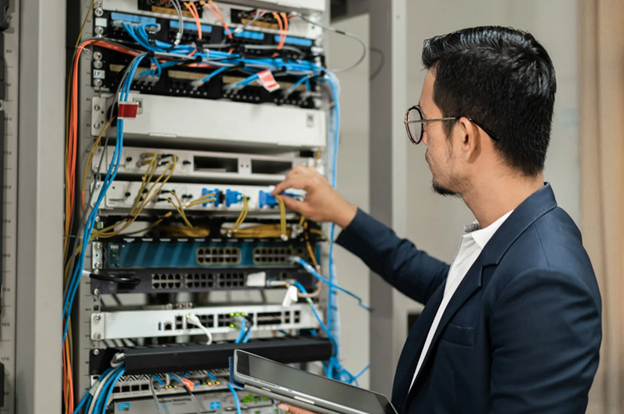
A strong hospitality network begins with the physical infrastructure that supports it. That includes structured cabling, main equipment rooms, and intermediate telecom closets throughout the property.
The location of these rooms matters. Network cabling has distance limits, so poorly placed closets may require additional equipment rooms and extra fiber connections.
“Sometimes a small change in where the main telecom room sits can eliminate the need for multiple additional closets,” Patel explains. “That can save both equipment cost and installation complexity.”
Careful planning also ensures there are clear pathways for cabling between floors and across the property. Elevators, utility spaces, and other vertical pathways often play an important role in efficient network design.
Planning these pathways during construction is far easier than retrofitting them later. Guidance, such as that outlined in WorldVue’s hotel technology planning guide, can help hoteliers avoid common design challenges.
Understanding Brand Requirements and Equipment Choices
Technology infrastructure in hospitality must also align with brand standards. Many major hotel brands specify approved vendors for network hardware such as access points, switches, and other core components. These standards help ensure consistent performance and security across properties.
When brands define required equipment, those standards guide the technology design from the start. For midscale brands and independent properties, owners may have more flexibility in equipment selection.
In those environments, experienced engineering teams can evaluate the building layout, expected guest usage, and operational needs to recommend equipment from leading technology vendors. The goal is always to deliver reliable performance while meeting the property’s specific requirements.
WorldVue works with a wide ecosystem of technology partners. This helps ensure each property receives equipment suited to its needs.
Access Point Placement Matters
Wireless connectivity depends heavily on the placement of access points. The goal is not simply to install more devices. Instead, teams must design the network to deliver strong, consistent coverage throughout guest rooms and common areas.
Construction materials can make a major difference. Signals travel more easily through drywall than through concrete or other dense materials. In some buildings, corridor access points may provide sufficient coverage. In other cases, installers may need to place access points in individual guest rooms to ensure reliable connectivity.
“Every building is different,” Patel notes. “Sometimes you can place access points in the hallway. In other situations, especially when construction materials block signals, the best option is to place them inside the rooms.” He offers an example in which the wiring is in the hallway’s drop ceiling, with APs above the doors in each room.
Engineering teams must balance signal strength with practical considerations such as cabling availability and installation complexity. The right approach depends on each property’s structure.
Planning for Unique Property Conditions
Every hospitality property presents its own design challenges. Some buildings have multiple towers or large campuses. Others may be historic structures with limited traditional cabling pathways.
In these situations, infrastructure design often requires creative solutions. Technology teams may need to identify alternative pathways, surface-mounted cabling, or specialized equipment. During the design process, our in-house team considers both operational and aesthetic requirements.
“We’ve worked with properties where you simply cannot run traditional cabling behind walls,” Patel says. “In those cases, the design has to adapt to the building while still delivering the performance guests expect.”
With the right planning, even complex environments can support high-performance connectivity. This applies to everything from a 100-room midscale hotel to a multi-building luxury resort.
Infrastructure Supports the Entire Guest Technology Ecosystem
Connectivity is the foundation for many of the technologies hotel guests interact with during their stay. Streaming entertainment, casting, property apps, and other digital amenities all depend on a reliable network.
That is why hoteliers should view network infrastructure planning as a strategic decision rather than a simple installation project. When designed correctly, the network becomes the backbone that supports the entire guest technology environment across the property.
Working with a technology partner that understands the full guest technology ecosystem can also simplify planning. Coordinating multiple vendors for different systems can be difficult and costly. Instead, properties can work with a single partner that designs infrastructure with every guest-facing technology in mind. This makes it easier to align network planning with streaming, casting, and other guest services from the beginning.
Up Next in Part 2
Infrastructure planning is only the first step in building a strong technology environment for hospitality properties.
In Part 2 of this series, we will explore how WorldVue works with hospitality properties as a consultative partner. We will look at the company’s in-house engineering team and its approach to technology design and deployment. We’ll also address how our team supports guest-facing technology across many hotel brands and property types.
Early technology planning helps hospitality properties avoid costly redesigns while delivering the connectivity guests expect. Learn how WorldVue supports hotels with infrastructure planning and guest-facing technology solutions.