
Before You Add Another AI Tool, Look at What Your Existing Systems Already Know.
Artificial intelligence is creating new opportunities in the hospitality industry. It can help teams recognize guest preferences, identify operational patterns, and respond more effectively to service needs.
However, adopting AI raises another question: Does the hotel already have information that could support these capabilities?
Hotels collect information through property management systems (PMS), customer relationship management platforms (CRM), guest messaging tools, maintenance systems, and other technologies. That information can offer valuable insights, yet it often remains scattered across separate platforms.
Before investing in another AI tool, hoteliers should understand what their existing systems collect. They also need to identify how that information connects and what they can realistically do with it.
In some cases, a hotel’s current technology may already provide the capabilities it needs. A new AI application might not be necessary. The better first step is to understand what existing systems can do, whether their information can be put to better use, and where genuine gaps remain.
WorldVue explored broader AI applications and readiness considerations in Hotel Innovation Insights #15: How AI Is Transforming the Hotel Guest Experience. Here, we’ll look more closely at one important part of that readiness: the information and technology hotels already have.
Your Hotel Already Has More Data Than You Think
Most hotels generate information throughout the guest journey and daily operations. The challenge is recognizing its potential value.
Consider some examples:
- PMS: Reservation details, stay history, room assignments, and other operational information.
- CRM and loyalty platforms: Guest preferences, previous interactions, and engagement history.
- Guest messaging and service platforms: Requests, questions, complaints, and communication patterns.
- Housekeeping and maintenance systems: Work orders, recurring issues, equipment history, and service patterns.
- Point-of-sale systems: Dining preferences, purchasing patterns, and spending activity.
- Guest feedback platforms: Reviews, survey responses, recurring complaints, and satisfaction trends.
Each system provides a different view of the property and its guests. However, if hoteliers bring those views together, they may offer a more complete picture.
However, collecting information doesn’t automatically make it useful for hotel operations. Teams need to access, interpret, and apply it. AI applications also need appropriate access to relevant information before they can generate meaningful results.
The Problem Isn’t Always a Lack of Data But a Lack of Connection.
Valuable information often resides in systems that don’t communicate effectively.
For example, a hotel might have a returning guest’s room preferences in its PMS or CRM. Guest messaging records might contain additional requests. Feedback platforms could reveal recurring complaints about the same room type or service.
Individually, these details offer useful information. Together, they could help hotel staff recognize preferences, anticipate needs, and address recurring problems.
Disconnected systems, however, make that harder. Employees may need to search multiple platforms, ask colleagues, or rely on memory. They might never see information that could improve a guest’s experience.
AI doesn’t automatically solve this problem. An application can only work with information it can access and interpret. System integrations, APIs, data formats, permissions, and vendor restrictions all influence what’s possible.
This distinction matters when evaluating new technology. A hotel might consider buying an AI tool to improve guest personalization, streamline service requests, or identify operational patterns. However, an existing platform may already offer some of those capabilities. Better integration or more careful configuration could address the need without adding another application, vendor, or layer of complexity.
That’s why an integrated technology strategy matters. Before adding another application, hotels should understand how their existing systems work together and where information gaps remain. For a broader look at this challenge, see Building an Integrated Hotel Technology Strategy.

Better Visibility Can Help Hotels Make Better Decisions
The challenge extends beyond guest information. Hotel teams also need a clear understanding of the technology supporting their operations.
Technology details often live across vendor portals, support systems, spreadsheets, contracts, and email conversations. Finding information about equipment, system performance, service requests, or ongoing projects can take time.
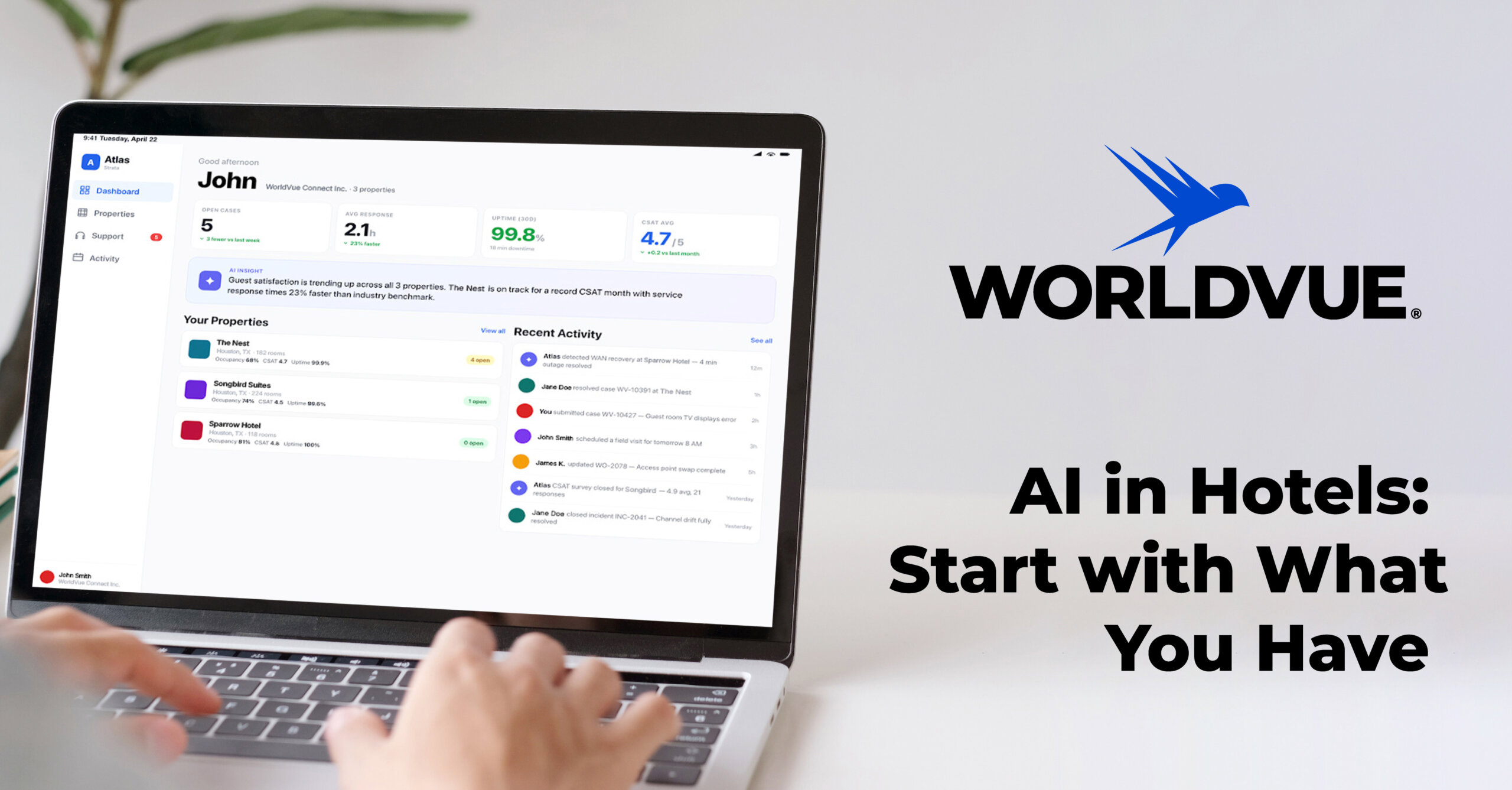
WorldVue Atlas addresses this operational visibility challenge. It gives hotel owners, GMs, and IT teams a consolidated view of their WorldVue technology. Teams can monitor network health, devices, in-room TV, support activity, and deployments across properties.
Instead of searching through separate sources, operators get a clearer view of their technology environment.
In its current state, while it does have an AI-based component, Atlas isn’t a universal connector for hotel systems. It does, however, illustrate a related principle: organizing and making existing technology information more accessible helps operators make informed decisions.
Learn more about WorldVue Atlas and its role in property technology management.
For a look at Atlas’s expanded capabilities and development, read our latest article, How WorldVue Atlas Is Expanding Hotel Technology Management.
What Could Your Hotel Do with the Information It Already Has?
When relevant information becomes more accessible, it can support a variety of potential AI applications. The right opportunities depend on the hotel’s systems, data quality, integrations, and business needs.
Recognize guest preferences more consistently.
A hotel may already collect information about room preferences, previous requests, and guest interactions. With appropriate access and connections, AI-assisted tools could help employees identify relevant details about returning guests. That information could support more personalized service without requiring staff to search multiple systems.
Identify recurring operational problems.
Maintenance records, service requests, and guest feedback can reveal patterns. For example, repeated complaints about a particular room or recurring equipment issues might point to a problem that needs attention. Analyzing relevant information together could help teams identify trends and prioritize action.
Give employees more useful information.
Employees often need quick answers while handling guest requests or managing daily operations. AI-assisted search and analysis could help them retrieve relevant information from accessible systems. However, those results depend on accurate records, appropriate permissions, and reliable connections.
These examples aren’t automatic outcomes of adopting AI. They illustrate what hotels can accomplish when they make better use of information they already collect.
Five Questions to Ask Before Investing in Another AI Tool
Before evaluating another AI application, hotel leaders should consider five questions:
- What information do our existing systems already collect? Identify the data and reporting capabilities available across the property.
- Where does that information live? Determine which platforms hold it and whether employees can access it.
- Can our systems share information? Review existing integrations, APIs, data formats, and vendor limitations.
- Is the information accurate and useful? Look for outdated records, incomplete profiles, duplicate entries, and inconsistent data.
- Do we actually need another tool? Define the problem, review what existing systems can do, and identify what they genuinely lack.
Privacy and security also require attention. Guest information should only be shared with authorized systems and users for appropriate purposes. Hotels should review vendor data policies, access controls, and applicable privacy requirements before connecting information to an AI application.
Build on What You Have Before Adding More
Of course, this isn’t an argument against adopting new AI capabilities. Some hotels will need new applications, integrations, or infrastructure to achieve their goals. However, buying another tool shouldn’t be the default response to every technology challenge. First, determine whether existing systems can meet the need through better configuration, integration, or use. Invest in something new when it addresses a genuine gap or delivers capabilities the hotel cannot otherwise achieve.
The goal isn’t to accumulate more technology but to make technology work together. This can give employees more useful, cohesive information to support better decisions across the property. It can also enhance the guest experience, thus improving guest satisfaction.
WorldVue helps hotels evaluate, integrate, and manage the technology that supports their operations. Before deciding what to add next, let’s start by understanding what you already have.
Talk with WorldVue about your hotel’s technology environment and opportunities to make it work better together.