
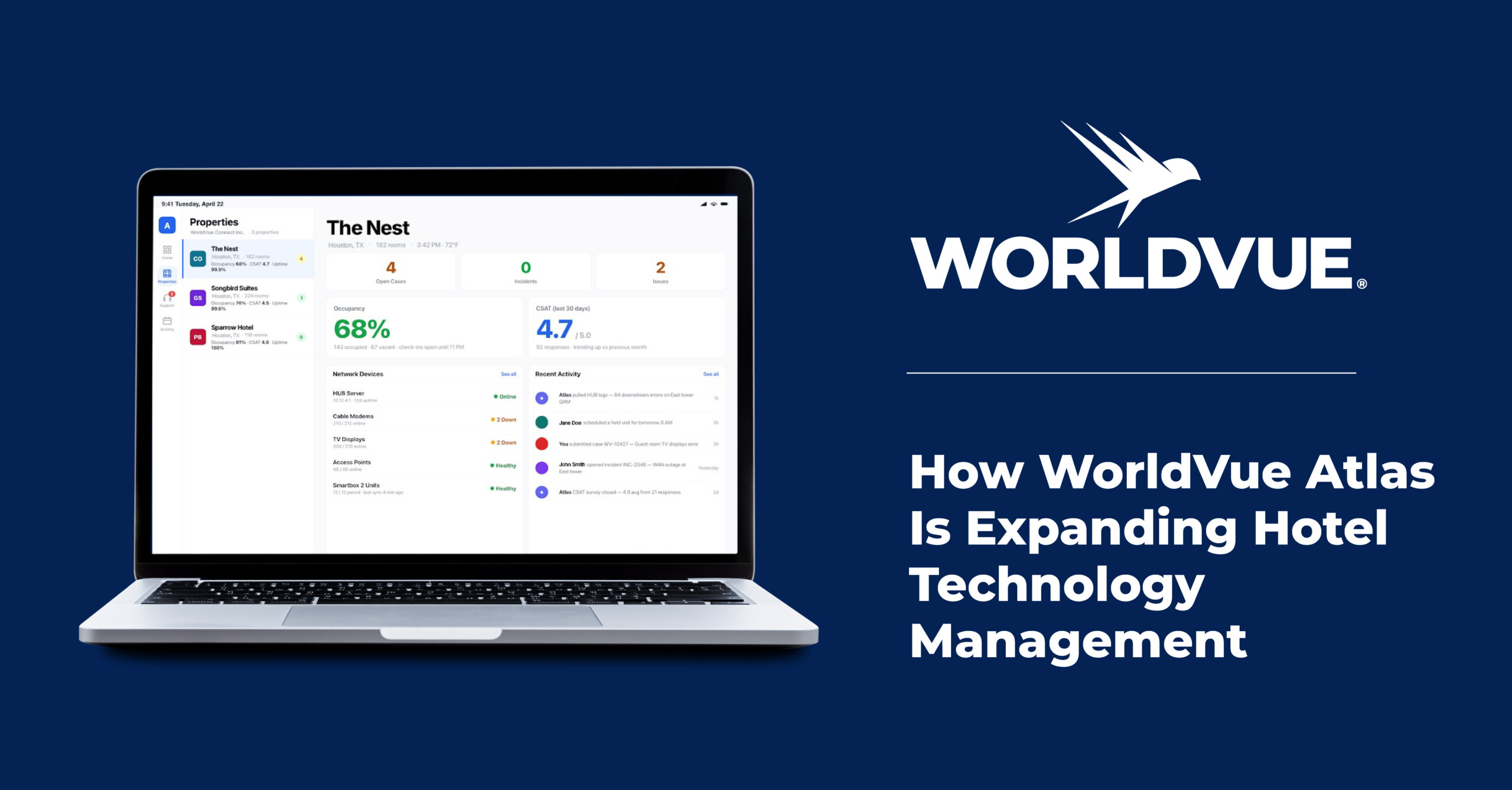
Hotels depend on a growing range of technology to support guests and staff. Yet managing that technology can be complicated. Information about equipment, vendors, contracts, service requests, and replacement plans often lives in separate systems.
That fragmentation makes it harder for hotel owners and operators to understand their technology environments and plan for what comes next. Teams may rely on spreadsheets, email threads, and individual knowledge to manage important details.
WorldVue Atlas is evolving to address this challenge. Atlas already provides portfolio visibility, network monitoring, deployment tracking, and support case management. Now, WorldVue is expanding Atlas toward broader technology lifecycle management. The goal is to help owners and operators understand what they have, what needs attention, and what’s coming next.
From Technology Visibility to Lifecycle Management
When WorldVue introduced Atlas, it focused on giving hotel teams better visibility and control over their technology environments. The platform brings together information about system health, network performance, device status, deployments, and support activity.
Our earlier article, Atlas: A New Operational Intelligence Layer for Hotel Technology Management, explains how Atlas helps operators gain a clearer picture of their technology environments and manage activity across their properties.
Atlas already gives hotel teams a detailed view of their technology environments. Operators can monitor access points, switches, appliances, displays, cable modems, and TV services. They can review network health and drill down into individual devices. Room-level views also help teams understand equipment status and the in-room TV experience. This includes channel lineups, guide order, and enabled streaming apps.
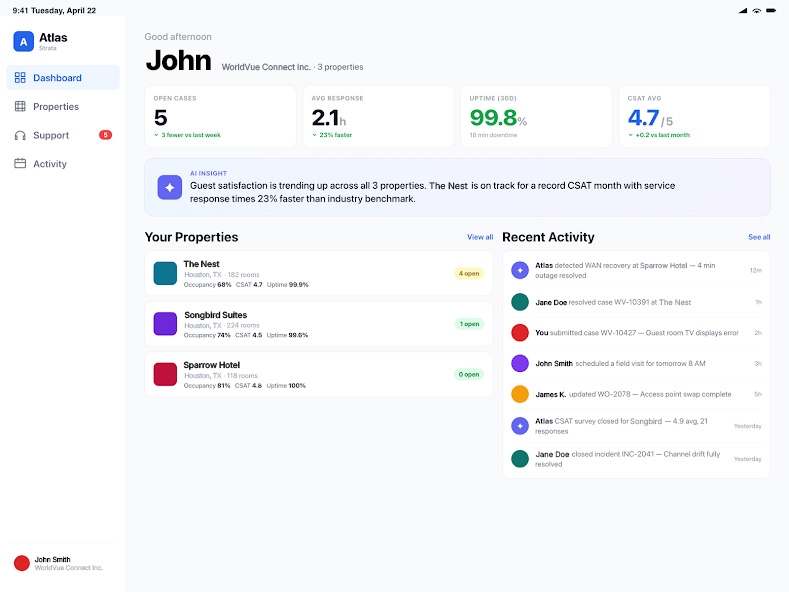
The portal brings together open support cases, opportunities and proposals, and active deployments across properties. Property-level views provide additional context, while vendor information helps teams identify service providers and related records. Atlas’s Data Vault also provides access to important documents, including contracts, as-built drawings, and channel lineups. Existing end-of-life device reports help teams identify aging equipment.
These capabilities provide a foundation for monitoring technology and managing day-to-day activity. The next phase builds on that foundation, extending Atlas into broader technology lifecycle management.
As announced in our October 2026 press release, WorldVue is now developing the expanded platform to give owners and operators greater visibility across properties, technology assets, vendors, costs, and lifecycle management.
The broader goal is to bring more of the information hotels need into one environment. That can help teams move beyond tracking individual systems and service requests toward a more complete view of their technology investments. It also advances Atlas’s role as a foundation for a broader property technology operating system.
Better Information for Technology Planning
Technology planning involves more than choosing new systems or approving an installation. Owners and operators also need to understand existing assets, anticipate replacement needs, track ongoing commitments, and prepare for future investments.
Atlas’s planned modules will address several parts of this process.
Capital budgeting will provide greater visibility into technology investments, planned projects, and portfolio-level capital requirements. This information can help owners and operators build a clearer picture of upcoming technology needs.
End-of-life management will expand on Atlas’s existing end-of-life device reporting. The planned module will help identify equipment approaching the end of its lifecycle. It offers reporting and optional alerts to help properties plan replacements and related capital needs.
Together, these capabilities support more proactive planning. Rather than responding only when equipment needs attention, teams can better understand upcoming replacement and investment requirements.
Keeping Contracts, Licenses, and Compliance in View
Technology creates ongoing obligations and upfront costs. Contracts need attention, software and service licenses may require renewal, and properties must maintain relevant compliance documentation.
When this information sits across different systems or departments, it can be difficult to maintain a consistent view across multiple properties.
Atlas’s planned contract management capabilities will centralize visibility into technology-related agreements and contracts. The existing Data Vault provides access to documents such as contracts. The planned module will extend Atlas’s role in managing technology-related agreements.
License and subscription management will help track licenses, subscriptions, renewals, and associated technology services. Meanwhile, compliance management will provide portfolio-level visibility into technology-related compliance requirements and documentation.
These capabilities would give owners and operators another way to organize important information and understand their obligations across a portfolio. They also extend Atlas’s purpose beyond day-to-day monitoring into the ongoing management of technology investments and services.
A Broader View Across Properties and Vendors
A hotel’s technology environment rarely consists of equipment and services from a single provider. Different properties may use different systems, vendors, and service arrangements. This complexity grows when owners manage multiple hotels or brands.
Atlas is being developed to support broader portfolio technology management, including properties that use technology services from providers other than WorldVue. The aim is to give owners and operators a more centralized view of technology assets and services across their properties, regardless of vendor.
This broader scope matters because technology information can become fragmented when properties change ownership or management. A centralized technology record can help preserve critical information during those transitions.
For portfolio leaders, the intended benefit is a more consistent way to understand technology environments across properties. This is true even when the underlying systems and providers differ.
Improving Visibility During Service and Field Work
Technology management also includes knowing what happens after a property reports a problem.
A support request may require a technician visit, equipment inspection, or additional work on site. Property teams need more than confirmation that someone has been dispatched. They also need updates on timing, reported issues, and work progress.
Atlas is expanding field-service visibility. This enables authorized users to view technician status, estimated arrival times, reported issues, and work progress. These details can give property teams a clearer picture of service activity and where a request stands.
WorldVue is also introducing MIA, an AI-powered phone agent. MIA gathers information from customers when they call for support and initiates a service case. MIA is intended to assist WorldVue’s support teams, not replace them. By collecting relevant details at the start of an interaction, it can help teams route cases with the necessary information.
Both developments support the broader goal of making technology support more visible and organized for hotel teams.
Bringing More Technology Management into One Place
WorldVue is also developing an invoicing capability within Atlas. This addition will allow customers to view and pay invoices through the platform. It represents another step toward bringing more technology-related information and activity into one environment.
For hotel owners and operators, the broader opportunity is to gain a more complete view of technology across their portfolios. That includes understanding current performance, tracking service activity, organizing technology records, and preparing for future needs.
Atlas’s expansion also reflects an important distinction: the platform isn’t intended to stop at monitoring equipment or managing support requests. Its planned capabilities extend into the financial, contractual, and lifecycle considerations that shape technology decisions over time.
The new modules and feature tiers will become available in future releases. Atlas is available to WorldVue customers today, with additional capabilities planned for future availability.
Take a More Informed Approach to Hotel Technology
Managing hotel technology takes more than keeping systems running. Owners and operators also need a clear view of their assets, service activity, contracts, and future investment needs.
WorldVue Atlas is evolving to support that broader responsibility. Its current capabilities provide a foundation for operational visibility and support. Planned modules will extend that foundation into technology lifecycle management across properties and vendors.WorldVue is launching MIA, an AI-driven phone assistant. MIA collects details from callers seeking help and automatically opens a support ticket.
Want a clearer view of the technology supporting your properties? Explore WorldVue Atlas to learn how the platform brings technology monitoring, in-room TV visibility, support activity, and deployment information into one place. Connect with our team to discuss your property’s or portfolio’s needs and learn more about Atlas’s expanding capabilities.