
Technology has become one of the largest operational investments inside the hotel.
Properties rely on connectivity infrastructure, guest room technology, entertainment platforms, security systems, communications tools, and operational software every day.
These systems support guests, empower staff, and keep operations running smoothly.
Yet many operators still struggle to answer seemingly simple questions:
- What technology assets do we have across the portfolio?
- How are critical systems performing?
- Which vendors support each service?
- What projects are currently underway?
- What equipment is approaching end of life?
The challenge is not a lack of technology. It is a lack of visibility.
Information often lives across vendor portals, tech support systems, spreadsheets, contracts, and email threads. As technology environments grow, maintaining a clear picture of the property’s technology ecosystem becomes harder.
In our recent article, “Managing Hotel Technology Requires Better Oversight”, we explored why oversight has become one of the industry’s most important operational challenges.
The next question is simple: What does better visibility actually look like?
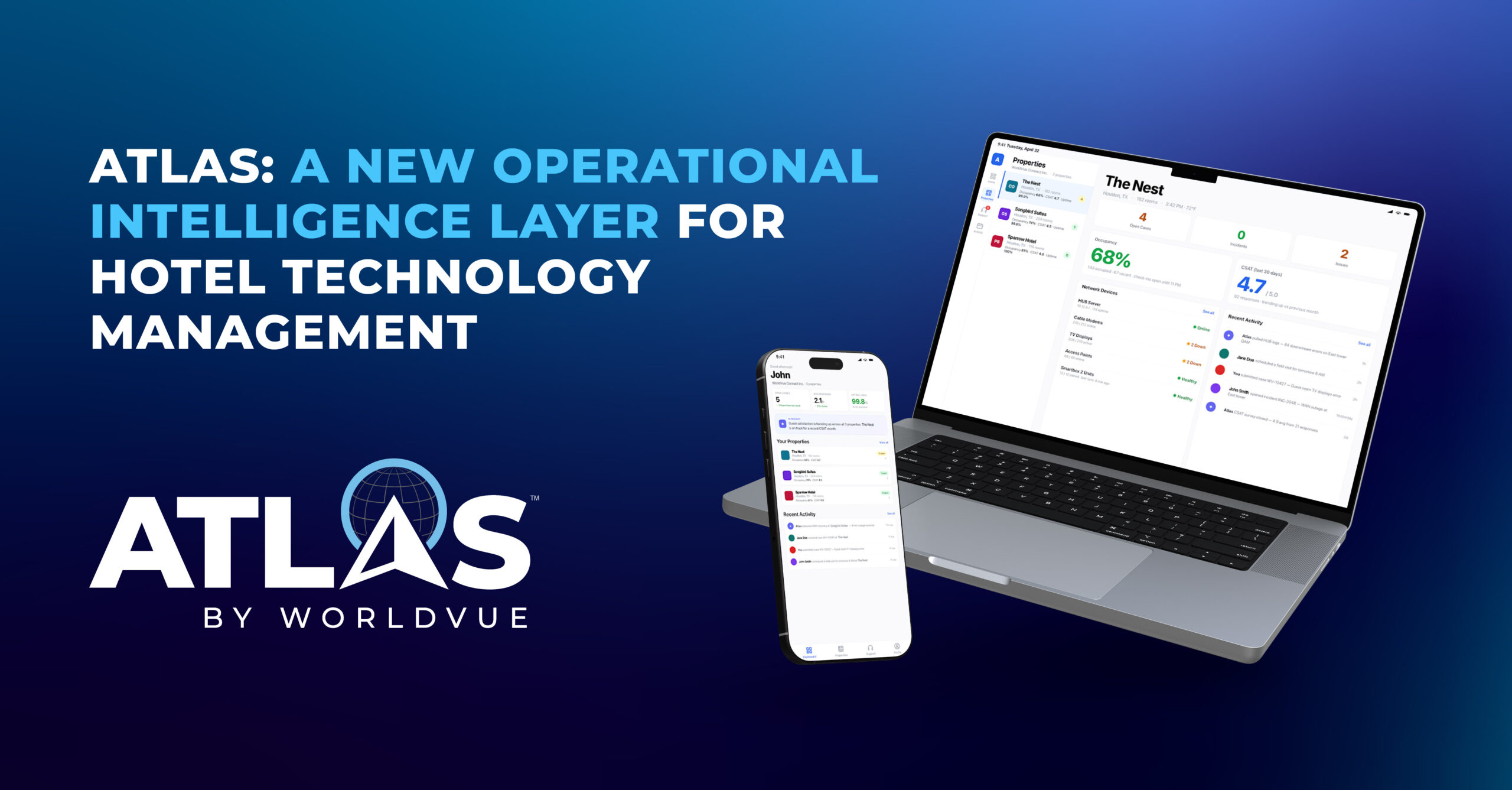
For WorldVue, the answer is Atlas.

Why Hotel Technology Visibility Matters More Than Ever
Most hotels do not struggle because they lack technology. They struggle because technology information is fragmented.
A property may work with multiple vendors. Projects often involve ownership groups, management teams, internal stakeholders, and outside partners. Upgrades, support requests, and service changes frequently follow different processes.
As portfolios grow, complexity grows with them.
Operators need answers to questions such as:
- What technology assets do we have today?
- How are our systems performing?
- Which issues occur most often?
- What changes have we made over time?
- Which vendors support each system and service?
Finding those answers often requires searching through multiple systems and conversations.
That process wastes time. More importantly, it limits an operator’s ability to make informed decisions.
Technology influences nearly every aspect of hotel operations. Yet many organizations still manage technology information through disconnected systems and fragmented workflows.
When visibility decreases, decision-making becomes harder. Capital planning becomes less predictable. Vendor oversight becomes more challenging. Accountability becomes harder to maintain across properties and teams.
The larger the portfolio, the greater the challenge.
Creating a System of Record for Hotel Technology
Hotels already rely on systems of record for reservations, finance, and other core business functions.
Technology deserves the same level of oversight.
What if your property had a single source of truth for every technology asset, vendor, and system?
That question became the foundation for Atlas.
Atlas gives hotels one place to see, manage, and optimize the technology ecosystem that supports their properties.
Rather than acting as another dashboard, Atlas serves as an operational intelligence layer for property technology.
It brings together information that traditionally lives in separate systems. As a result, operators gain greater transparency, stronger control, and better insight into their technology environment.
How Atlas Helps Hotels Manage Technology More Effectively
Atlas is built around three core principles: visibility, control, and intelligence.
Visibility Across Property Technology
Visibility starts with understanding what is happening right now.
Atlas provides insight into system health, network performance, device status, deployments, support activity, and other operational data.
Operators can review information across a single property or an entire portfolio.
Instead of switching between systems, teams can access critical technology information in one place.
Greater Control Over Services and Requests
Many technology workflows still rely on emails, phone calls, and manual follow-up.
Atlas replaces those disconnected processes with centralized request tracking.
Operators can submit service requests, monitor deployments, track progress, and review project status through a single platform.
What once required multiple conversations becomes structured, transparent, and easier to manage.
Intelligence That Supports Better Decisions
Visibility is valuable. Historical context makes it useful.
Atlas provides access to ticket history, issue trends, deployment records, upgrade history, and performance data over time.
That information helps operators identify recurring issues, understand long-term trends, and make more informed technology decisions.
From Fragmentation to Control
Many organizations still depend on institutional knowledge to manage technology.
Someone knows which vendor supports a system. Another person remembers the status of a project. A third person knows where critical documentation lives.
That approach becomes harder to sustain as technology environments expand.
Atlas helps operators move from fragmented processes to structured workflows.
Instead of relying on scattered information, teams gain a centralized view of technology services, assets, projects, and support activity.
The result is greater accountability, improved transparency, and a clearer understanding of what is happening across the property.
Technology decisions move from email chains and spreadsheets into a structured, trackable environment. Teams can monitor activity, understand status, and make decisions with greater confidence.
What Atlas Delivers Today
While Atlas supports a larger long-term vision, its value starts with practical tools operators can use today.
Current capabilities focus on improving visibility across properties, simplifying support interactions, and creating a clearer understanding of technology performance throughout the portfolio.
Portfolio Visibility
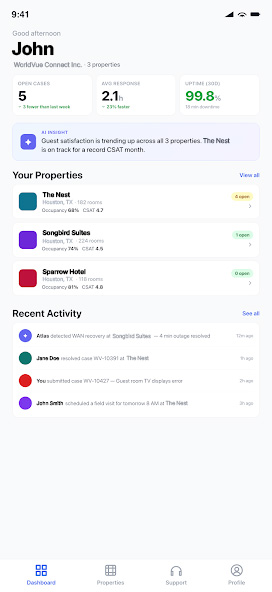
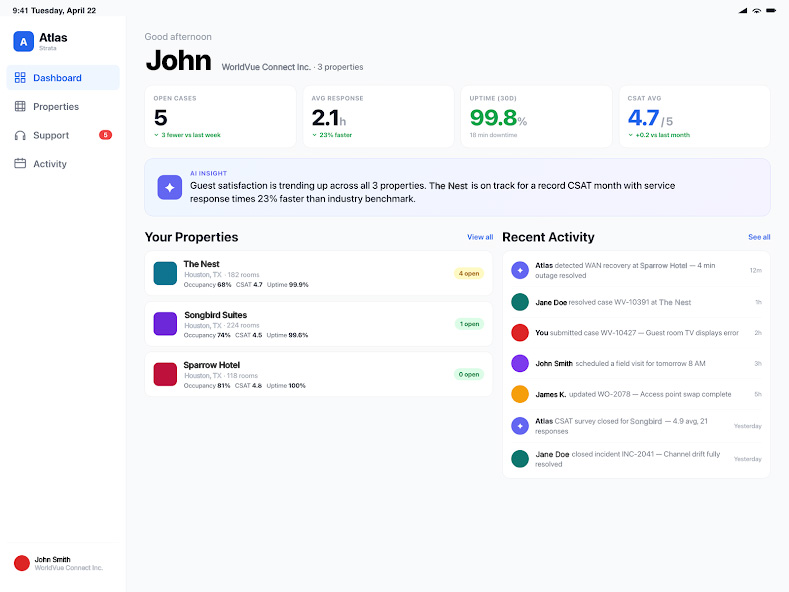
Atlas provides a portfolio dashboard that gives operators a consolidated view of their properties.
Teams can review device summaries, network information, and operational activity from a single location.
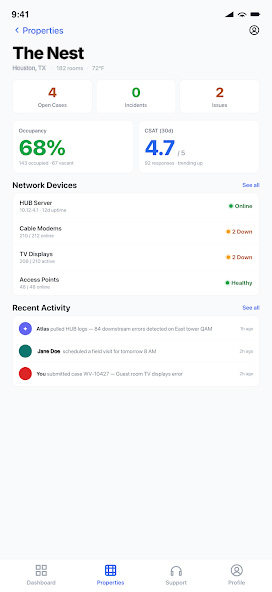
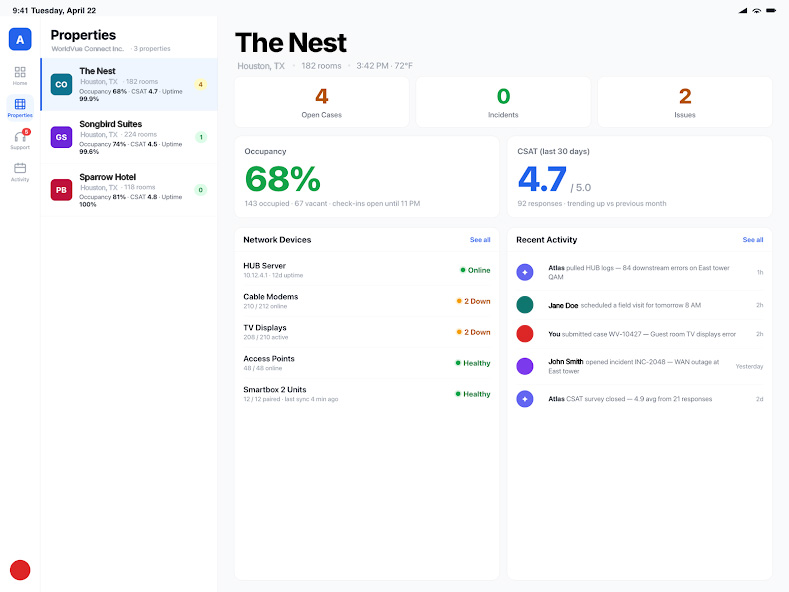
Property-level views provide additional detail and help teams understand the health of individual locations.
Operational Monitoring
Atlas provides detailed visibility into equipment and services across the property.
Teams can monitor access points, displays, networking equipment, cloud devices, television services, and other critical infrastructure.
They can also review performance metrics and drill into individual devices when needed.
Service and Support Management
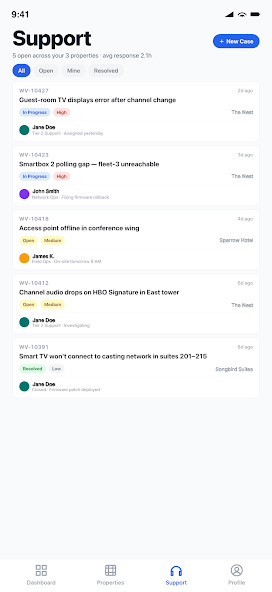
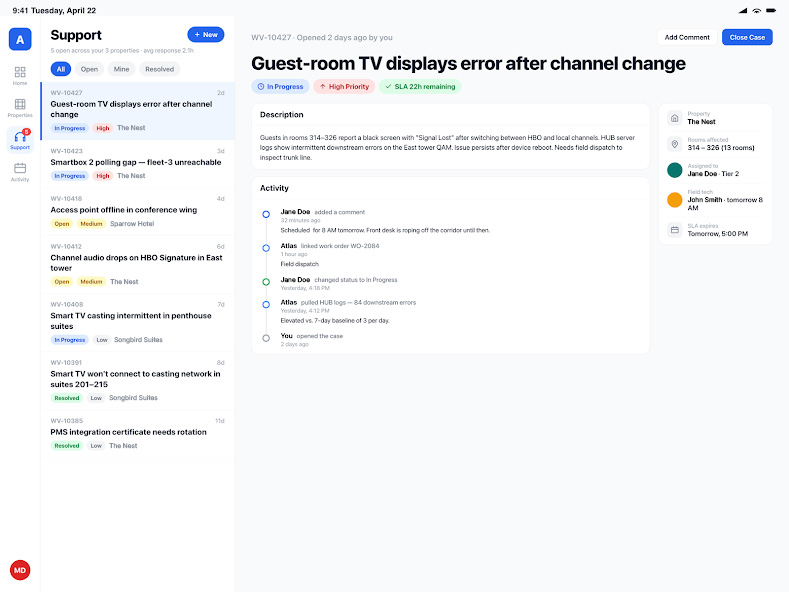
Atlas centralizes support activity across the portfolio.
Operators can open requests, track cases, review history, and monitor progress in a single environment.
This approach reduces manual follow-up and creates a more transparent service experience.
Project and Deployment Tracking
Operators can also monitor active and planned deployments.
This visibility helps teams understand project status and maintain oversight of ongoing technology initiatives.
The Future of Property Technology Management
Atlas is not the final destination; it is the foundation.
As Mark Schaps, WorldVue’s Executive Vice President and Chief Information Officer, explained during the launch of Atlas:
“We built it to simplify complexity, scale globally, and give our customers a platform they can rely on today while being ready for what’s next.”
That vision extends beyond visibility alone.
WorldVue’s long-term vision is to create a Property Technology OS that gives operators a centralized system for managing technology assets, services, vendors, performance, and operational intelligence across their portfolios.
Future capabilities will expand that foundation through lifecycle and budget planning, vendor management, proposal management, documentation access, and additional intelligence tools.
Over time, operators will gain deeper insight into technology lifecycles, vendor relationships, renewals, and future planning needs.
The goal is straightforward: to help hotels manage technology with the same level of control they expect from other core business systems.
Better Oversight Leads to Better Decisions
Technology decisions affect nearly every part of hotel operations.
They influence guest satisfaction, staff productivity, capital planning, vendor management, and long-term property performance.
When visibility improves, decision-making improves.
Teams can identify recurring issues faster. Operators can better understand system performance. Ownership groups can gain clearer insight into technology investments across their portfolios.
Most importantly, teams can manage technology proactively rather than reactively.
Hotels have long relied on systems of record to manage reservations, finances, and other core business functions. As technology becomes more critical to operations, it deserves the same level of oversight.
Atlas is an important step toward that future.
Atlas is currently available to all WorldVue customers via web browser and iOS and Android mobile applications.
Learn more about Atlas and its current capabilities.
To learn more about WorldVue’s vision for connected hospitality technology, read Managing Hotel Technology Requires Better Oversight and The Next Evolution of the Connected Hotel Experience.